From the ACE database. Researched and checked against published sources.
Ferdinand Marcos
1917 to 1989, President of the Philippines from 1965, ruling under martial law from 1972 until ousted in 1986
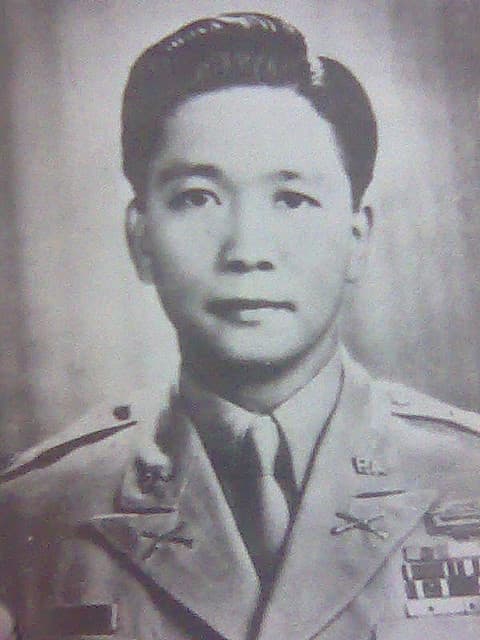
Unknown author, Public domain, via Wikimedia Commons
43/100
ACE Score: 43/100
Medium on the scale. An index, not a percentage.
65Medium
How total and coercive the leader’s power was.
40Medium
How devoted to and dependent on the leader followers became.
25Low
How hard it was to leave.
(rule-based):Pattern: walls low enough (Bubble Score under 5) for followers to leave fairly easily. A label for these scores, not a forecast. The summary and caveats describe what actually happened.
Scores are an interpretation of published sources using the ACE scoring guide, not findings of fact. Inclusion does not classify anyone as a cult. Disclaimer
Ferdinand Marcos was elected president of the Philippines in 1965 and declared martial law in 1972, before his second term ran out. He shut Congress and most of the press, jailed opponents and ruled by decree. Security forces killed, tortured and imprisoned thousands of people. He and his wife Imelda took billions of dollars in public money through cronies and state firms. The 1986 'People Power' uprising forced them into exile in Hawaii.
In academic terms, marcos ran a personalist kleptocracy with moderate epistemic and existential closure but little social or temporal closure; binding came through patronage and fear, and the regime collapsed once the military and Church turned against him.
Where scholars disagree
The case that the framework fits
Mijares, a former Marcos propagandist and press censor, and journalist Raymond Bonner describe a regime built on fear, personal enrichment and an image of Ferdinand and Imelda as national saviours.
The case that it does not fit, or overstates
Marcos's defenders point to roads, schools and other infrastructure and to claims of order, and the family remains politically popular; his son Ferdinand Marcos Jr. was elected president in 2022. Scholars generally see a kleptocratic dictatorship rather than a movement with a doctrine or devoted followers.
The five walls
4 of 10
- 6
1.
Who decides what is real?
On declaring martial law in 1972 Marcos closed most newspapers, radio and television stations, and the media that reopened were mostly owned by allies. Critical journalists were arrested.
- 2
2.
Are friends and family outside the group cut off?
The regime did not interfere much with family life. Its 'New Society' rhetoric presented Ferdinand and Imelda as parents of the nation.
- 3
3.
How hard is it to physically leave?
Under martial law, travel abroad required government clearance and curfews were imposed. Many opponents went into exile, and Benigno Aquino Jr. was shot dead on his return in 1983.
- 2
4.
Is an apocalypse or a destined triumph always near?
Marcos promised a 'New Society' and national renewal. These were vague goals without millennial or apocalyptic content.
- 7
5.
Does the group decide who deserves to live?
Historian Alfred McCoy's widely cited figures give about 3,257 extrajudicial killings between 1975 and 1985, 35,000 people tortured and 70,000 imprisoned. Bodies of 'salvaged' victims were often dumped in public.
Debt, dependence and harm
3 of 10, low
How much do followers feel they owe?
Business and political advancement depended on loyalty to the Marcos family and its cronies. Ordinary citizens faced few demands beyond silence.
7 of 10, high
How far does everything rest on one person?
Marcos ruled by decree and placed Imelda and relatives in key posts. There was no credible succession plan, and the regime fell with him in 1986.
+5, mostly outsiders
When the system turns violent, where does the harm go?
Outward: killings and torture targeted people the regime defined as enemies, namely opponents, student activists, suspected communists and Muslim separatists in Mindanao. Inward: few regime insiders were victims.
Methods of control
Specific techniques from the historical record that kept followers loyal and the bubble sealed.
- 01Martial law decrees closing Congress and the press
- 02Arrest, torture and 'salvaging' (summary killing) of opponents
- 03Crony capitalism linking business success to the ruling family
- 04Rigged elections and referendums to give legal cover
- 05Promoting Ferdinand and Imelda as national parents through spectacle
- 06US support justified by anti-communism
Against the reference cases
State power, violence aimed outward
Compared with Hitler
Marcos had none of Hitler's ideological fervour or genocidal aims; his rule was mainly about keeping power and wealth.
A sealed group, violence aimed inward
Compared with Jones
Unlike Jones, Marcos sought no inner devotion; most Filipinos lived ordinary lives as long as they stayed quiet.
Through the theorists
Marcos's rule was patrimonial: the state was run as personal property of the ruler and his household.
Juan Linz
The Philippines under Marcos is often cited as a sultanistic regime, where loyalty to the ruler replaces rules and institutions.
Albert Hirschman
When voice was blocked, exile and finally mass protest in 1986 became the paths out; the regime had no hold on loyalty strong enough to stop them.
Key sources
Moderate evidence base
- Bonner, Raymond (1987). Waltzing with a Dictator: The Marcoses and the Making of American Policy.
- Mijares, Primitivo (1976). The Conjugal Dictatorship of Ferdinand and Imelda Marcos.
Caveats
Classified as an authoritarian ruler for the martial law period; his early electoral career had populist features. Mijares wrote as a defector and his book is partisan. Victim figures are estimates from human rights groups and McCoy. Marcos family revisionism continues to shape public debate.
Cite this profile
Koziol, T. (2026). Ferdinand Marcos. In ACE: Authority, Cult & Exit (Version 1.1, pilot database). Ceraluna Labs. https://cultornot.com/leader/ferdinand-marcos