From the ACE database. Researched and checked against published sources.
Helena Blavatsky
1831 to 1891, co-founder of the Theosophical Society in New York in 1875, later based in Adyar, India, and London
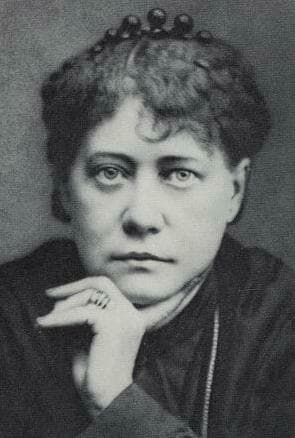
Unsure, Public domain, via Wikimedia Commons
22/100
ACE Score: 22/100
Low on the scale. An index, not a percentage.
25Low
How total and coercive the leader’s power was.
30Low
How devoted to and dependent on the leader followers became.
10Low
How hard it was to leave.
(rule-based):Pattern: walls low enough (Bubble Score under 5) for followers to leave fairly easily. A label for these scores, not a forecast. The summary and caveats describe what actually happened.
Scores are an interpretation of published sources using the ACE scoring guide, not findings of fact. Inclusion does not classify anyone as a cult. Disclaimer
Blavatsky was a Russian-born writer who co-founded the Theosophical Society in New York in 1875 with Henry Steel Olcott and William Quan Judge. She said she received teachings from hidden 'Mahatmas' in Tibet and wrote Isis Unveiled and The Secret Doctrine. In 1885 a Society for Psychical Research report by Richard Hodgson accused her of faking letters and phenomena. The Society was an open membership organisation with branches worldwide, and it continued after her death in 1891.
In academic terms, blavatsky's authority rested on claimed hidden Masters, but it sat inside an open, elected society; closure was low except in her small Esoteric Section.
Where scholars disagree
The case that the framework fits
The Hodgson Report and later critics such as Washington describe staged phenomena, forged letters and a leader who claimed unquestionable access to hidden Masters.
The case that it does not fit, or overstates
Campbell and others note the Society's open, elected structure and free debate, and Vernon Harrison's 1986 re-examination for the SPR challenged Hodgson's handwriting evidence.
The five walls
1.8 of 10
- 3
1.
Who decides what is real?
Her writings and the Mahatma letters were treated as privileged sources. The Society's motto, 'There is no religion higher than truth', and its open membership kept outside reading free.
- 1
2.
Are friends and family outside the group cut off?
Members joined local lodges while keeping families and jobs. No steering of marriage or family life is documented.
- 1
3.
How hard is it to physically leave?
Some officers lived at the Adyar headquarters, but members came and went freely.
- 2
4.
Is an apocalypse or a destined triumph always near?
The Secret Doctrine describes long cosmic cycles and successive 'root races'. This is a very long horizon with no imminent end.
- 2
5.
Does the group decide who deserves to live?
The root-race scheme ranked peoples and called some races degenerate, an idea later borrowed by racist occultists. She did not call for harm, and critics were answered in print.
Debt, dependence and harm
3 of 10, low
How much do followers feel they owe?
Members paid dues and gave time. The Esoteric Section she founded in 1888 required a pledge of obedience to her in spiritual matters.
4 of 10, medium
How far does everything rest on one person?
The Society had a constitution, a president (Olcott) and branch structure from early on. After her death Olcott stayed president while Annie Besant and William Quan Judge led the Esoteric Section, and disputes between them led to an American split in 1895.
0, little harm, or balanced
When the system turns violent, where does the harm go?
No violence is documented.
Methods of control
Specific techniques from the historical record that kept followers loyal and the bubble sealed.
- 01Claim of contact with hidden Masters
- 02Letters presented as from the Mahatmas
- 03Esoteric Section with a pledge of obedience
- 04Graded access to secret teaching
- 05Large written doctrine as reference point
Against the reference cases
State power, violence aimed outward
Compared with Hitler
Austrian and German Ariosophist occultists borrowed and distorted her root-race ideas, but Blavatsky led no political movement and preached universal brotherhood.
A sealed group, violence aimed inward
Compared with Jones
Her Society had no compound, no isolation and no control over members' lives, so it is a contrast case.
Through the theorists
Charisma based on claimed hidden revelation, institutionalised early in an elected society that outlived her.
Stark and Bainbridge
A 'client cult' that grew into a cult movement with branches, keeping low tension for ordinary members.
Campbell (Colin)
A prime example of the 'cultic milieu', a loose field of seekers rather than a closed group.
Key sources
Moderate evidence base
- Washington, Peter (1993). Madame Blavatsky's Baboon: Theosophy and the Emergence of the Western Guru.
- Campbell, Bruce F. (1980). Ancient Wisdom Revived: A History of the Theosophical Movement.
Caveats
The fraud question remains contested. The root-race doctrine is open to racist readings but was framed within universal brotherhood. Control was higher only in the Esoteric Section after 1888.
Cite this profile
Koziol, T. (2026). Helena Blavatsky. In ACE: Authority, Cult & Exit (Version 1.1, pilot database). Ceraluna Labs. https://cultornot.com/leader/helena-blavatsky